
THE WOLSELEY 6/80
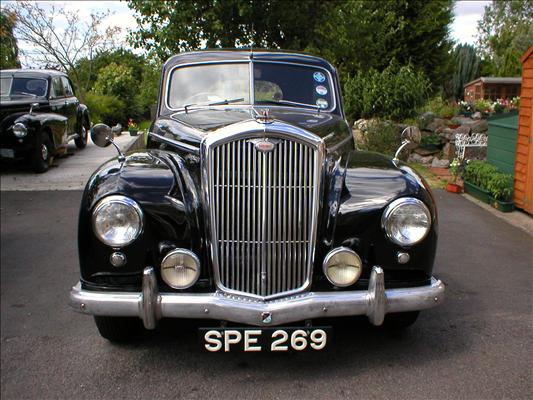
Introduced at the 1948 London Motor Show, the Wolseley 6/80 is the big brother to the 4/50, with a 6-cylinder 2215cc OHC engine, and cost £1,121 in 1952. It had walnut effect instrument panels, wooden glove box covers and door cappings, leather seats with Dunlopillo foam, and carpeting throughout. 25,280 were sold during its production run, with the UK Police Forces making good use of them, and many being exported.
The Wolseley 6/80 (more correctly Wolseley Six Eighty), introduced at the 1948 Earls Court Motor Show, was Wolseley’s first brand new post-war car, along with the smaller engined 4/50 and not only featured a vehicle of unitary (monocoque) construction, but one which also incorporated an entirely new engine, which itself was designed, tested and put into full production within one year of its original conception. The basic shape of the 6/80 never changed throughout its entire production run and although there were some obvious Trans-Atlantic features such as a split windscreen and column gear change, the 6/80 still retained several pre-war features such as the side opening bonnet and massive upright Wolseley radiator grille.
Production of the 6/80 commenced in October 1948 at the old Wolseley works at Ward End, Birmingham. However, only 18 cars were built at the Midlands plant before production was moved to Cowley near Oxford, where production resumed in March 1949 and continued until the model was replaced by the Wolseley 6/99 of BMC in October 1954.
The engines for the 6/80, as per the 4/50 and Morris Oxford MO were all produced at the Morris Engines Branch in Coventry.
The engine fitted to the Wolseley 6/80 is regarded by many as quite a feat of engineering, fed by means of twin 1 ¼” SU carburettors (with electric choke – EED) and an electric fuel pump (mounted on the bulkhead) the 6 cyl ohc unit of 2,214.8cc (135.15 cu in) produced 72bhp @ 4,600rpm.
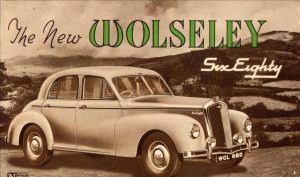
Centre hinged side opening “gull wing” bonnet.
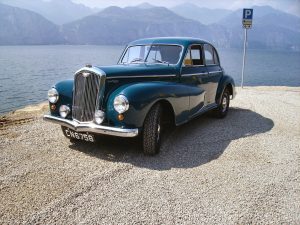
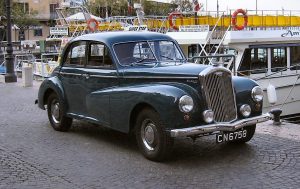
A 1951 car in dark blue. Originally an export to Ceylon.
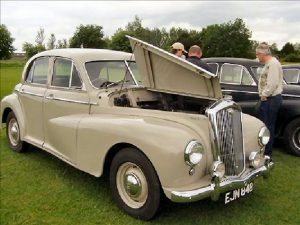
Centre hinged side opening “gull wing” boonnet.
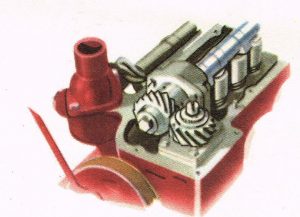
Split helical gear camshaft drive.
The engine design is unique to the 6/80 (6 cyl) and 4/50 (4 cyl) cars, the valve train of which is based on that of a 1915 V8 aero engine (the Wolseley Viper, which powered the SE5A Biplane, made by the armaments company Vickers – the owners of Wolseley at the time – and produced under licence from Hispano Suiza during WW1, the Hispano version powered the French SPAD).
The engine “family number” is VC22W (W for Wolseley, the Morris version would be VC22M) and is classified as “under square”. Often misquoted as “longstroke” the stroke is only slightly longer than the bore, but, far shorter than many contemporary marques of the era which had very narrow bores and far longer strokes (this was because of the RAC taxation system at the time) thus it is “short stroke” in comparison but should be more correctly termed “under square.
The 6/80 engine, like it’s 4cyl counterpart, has a single overhead camshaft operating directly onto tappets which are screwed into the valve stems. Valve clearance adjustment being by a ratchet system. Split helical gears drive the camshaft from a vertical shaft at the front of the engine, which also drives the oil pump at the bottom and the distributor at the top.
The ohc engines (4 & 6 cyl) gained a reputation for burning out their exhaust valves after a relatively low mileage and there has always been much engineering debate as to why some engines were affected and others not.
It would seem fair to say that a combination of how the valves and guides operated, the materials they were made from, the use to which the vehicles were subjected and the poor quality low octane petrol of the time (which was a major cause of overheating and detonation/pre-ignition), were all contributing factors to the problem.
Any engines that may have experienced valve trouble will probably have been rectified by now as the club has commissioned the manufacture of high grade stainless steel valves and phosphor bronze exhaust valve guides thus new long-lasting parts are available. The club has never had a report of the newly manufactured components failing.
For an insight to the 6/80 & 4/50 engines and their design, please refer to the “The OHC engines” page.
The earlier engines were designated Series I but towards the end of 1952, a redesigned cylinder head and cooling system with enlarged waterways was introduced, featuring longer stemmed valves which were designed to work at an improved angle.
The Compression Ratio (CR) was also reduced from 7.0:1 to 6.5:1 to prevent detonation and “running on” after switch-off, a common problem when using the post-war low grade fuels which were all that were available at the time.
This later engine became known as the Series II and in the case of the 6/80 commenced from engine N° 20301 (and also a limited number of engines commencing No. 1001/2)
It is still possible to find a genuine low mileage car where no engine work has been carried out in the past and, if it has been well maintained, there should be no cause for concern. A well maintained 6/80 with a properly tuned engine will keep up with today’s road conditions and will give its owner countless hours, and miles, of immeasurable pleasure and satisfaction.
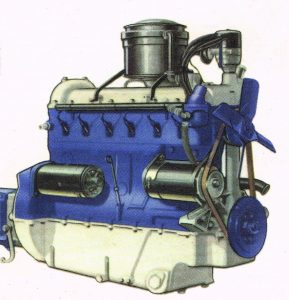
The Wolseley 6/80 engine.
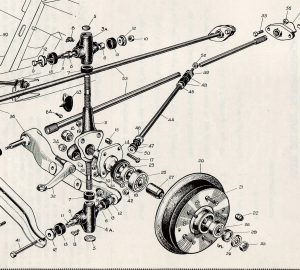
The trunnion and swivel-pin set up of the front suspension was common to many other vehicles of the time – although in the case of the 6/80, was probably over-engineered to some degree to cope with the weight of what was in fact, a very heavy engine, towards the front of the car. As with any set up of this design, the key to reducing wear in the internal trunnion and external swivel-pin threads is to ensure they are greased at the prescribed servicing intervals.
Even when this has been carried out satisfactorily, blocked grease nipples and the failure of the grease to find its way around every component can reduce the life expectancy of these items.
All 6/80’s used Lockheed hydraulic drum brakes, incorporating twin leading shoes on the front wheels and one leading and one trailing shoe on the rear (to give some degree of braking efficiency when reversing).
The 10” drums employed are more than capable of stopping the 25cwt car.
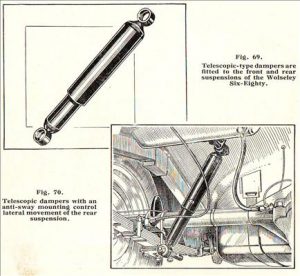
The early cars had Armstrong lever type dampers which were soon replaced with telescopic types, twin at the front and singles at the rear.
Tyre pressures were stipulated at 32psi for the original 6.00 x 15 inch cross ply tyres.
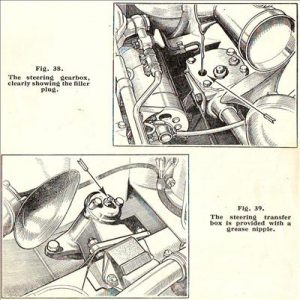
Steering is by Bishop cam steering box incorporating six (3 pairs) of track/tie rod ends and a transfer box on the passenger side beneath the front cross member.
The Wolseley 6/80 was available in various paint colour options – black, maroon, green and grey. The green varieties and some greys were produced in a metallic finish. The so called “Moonstone Grey” was more of a grey/beige colour and, although never listed as an option, some 6/80’s appear to have been turned out in white. Maroon was withdrawn for a while, probably due to its tendency to bloom and fade, but was reinstated towards the end of production.
Twin auxiliary lamps were fitted at the front, one spot lamp and one fog.
A built-in reversing light was incorporated into the rear number plate lamp (the lights have to be on first to make this work) and when the boot was open, a red warning light attached to the inside of the boot lid, would shine to the rear.
Overriders were fitted to the front and rear bumpers as standard, as well as a flip-up type fuel filler cap.
The external door handles (all 4 are different and non-interchangeable) boot hinges and windscreen centre pillar were made from Mazak (Zamak, formerly trademarked as Mazak, a zinc based alloy with elements of aluminium, magnesium, and copper). Consequently the chrome finish on these parts (not being copper plated prior to chroming) suffered from severe pitting even after a short period, the degree of pitting depended greatly on the amount of sulphur in the atmosphere, i.e. industrial areas vs urban.
The club has commissioned the remanufacture of many of these parts in bronze, which does not suffer the same fate.
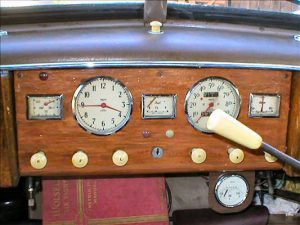
Internally, being a Wolseley, the 6/80 benefitted from leather seats, wooden dash and door cappings (the instrument panel was wood effect “faux bois” commonly termed “Scumble” the brand name of the special lacquer used) and full Wilton carpeting throughout.
The car was fitted with a heater which was upgraded in later production, and single-speed electric windscreen wipers.
Instrumentation consisted of speedometer, clock, ammeter, fuel and oil pressure gauge but no temperature gauge.
Any engine (regardless of manufacturer) that is allowed to overheat will also suffer additional problems, usually warping or cracking of the cylinder head. Had the manufacturer seen fit to incorporate a temperature gauge as standard equipment, then early indications that the engine was getting too hot would have been spotted by the driver well beforehand and many an engine spared from this fate.
The dashboard also incorporated warning lights for ignition, main beam, and for when the electric choke was in operation.
The dash knobs and steering wheel were made from a light plastic material which tended to disintegrate when exposed to damp and/or sunlight for extended periods.
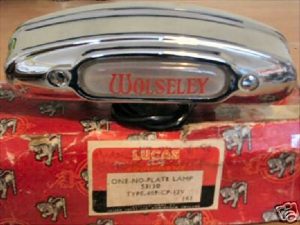
Reversing light with illuminated Wolselely badge.

Two courtesy lights in the rear passenger compartment operated automatically, via plunger switches in the centre door pillars.
Over the production run, there were many variations in interior colours. Although brown, red, green and grey seemed to be the norm, some cases of white, beige and even dual tone interiors have been discovered.
Likewise, whilst a green car would usually have a green interior and a grey car a grey one etc. this was not always the case and it would appear that for reasons best known to themselves, the fitters on the production line would sometimes fit a “different” interior. Whether this was for experimental purposes, or simply to use up an excess of a certain trim colour, will never be known.
Early cars can be recognised by certain external and internal fixtures.
Early cars, for example had no separate side lights and the headlight surrounds were painted without chrome rims.
Circular rear light lenses were fitted in the very early days and the door handles were of a ribbed design with no escutcheon plates. The Series I car bonnet scripts depicted “SIX EIGHTY” whilst Series II cars had cursive script and depicted “Wolseleysixeighty” in similar (but not identical) script to that shown here.
Inside, the seats were of a separate “bucket” type, prior to the split bench type on later models.
Some cars and almost all export cars (unless specified by the customer) were fitted with bench seats.
The glove compartments lacked lids and the inner door panels were fitted with door pulls as opposed to arm rests.
Early dashboards curved downwards at the ends and the ammeter fuel and oil pressure gauges were in different positions to the Series II cars.
There was a rear window roller blind fitted on the rear parcel shelf. Pulling on a ring mounted on the ceiling, midway, pulled a cord which raised the blind to eliminate dazzle from following vehicles’ headlights at night, or for privacy.
Under the dashboard there was also a fuel cut-off device, which closed the carburettor jets, preventing the engine from “running on” after the ignition was switched off, the cause of which was fuel detonation, a combination of the relatively high (for the time) compression ratio of 7.0:1 and the poor quality low octane fuel which was common in the post war years.
Under the bonnet, early cars had the battery mounted in the middle of the firewall, later cars, to the driver’s side of the engine compartment. SI radiators had a screw-on filler, SII’s, a push-and-twist type. SI cylinder heads had 8 ports whilst SII’s had 10.
There is no doubt that the Wolseley 6/80 made a great deal of money for the Nuffield organisation. It was a top of the range vehicle, a fast car in its day and able to exceed 80mph under favourable conditions.
Between 1948 and 1954 a total of 24,886 cars were produced of which 14,341 went to the home market, the remainder being exported to various countries around the world but mostly to Australia.
In the UK, including the dreaded purchase tax, a new Wolseley 6/80 in 1948 would have cost £767, 8/4d – by 1952 the price had risen to £1,121 10/ -.
The very last Wolseley 6/80 made – a grey car, was delivered to H. Beart & Co. Ltd in Kingston-upon-Thames, Surrey.