
THE MORRIS RANGE 1954 – 1960

Further Reading

Click here to visit the Morris Oxford page
Click here to visit the Morris Cowley page
Click here to visit the Morris Isis page

Click here to visit the Morris Commercial page

Click here to visit the Hindustan page
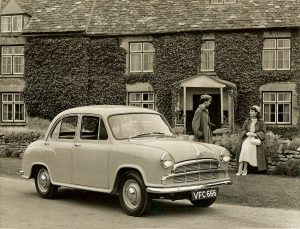
By the mid 1950’s the Morris range of the Oxford Series MO and Morris Six needed updating and modernising. The result was a new range of body styles and engines presented as Oxford, Cowley and Isis models.
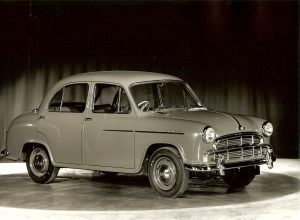
An Oxford Sll Saloon
OXFORD
The Series II was announced in May 1954. It was a modern vehicle but retained semaphore indicators and column change with similar trim and external colours to its predecessor. The performance was transformed as it was the first Morris with the B-series 1,489cc ohv engine, torsion bar suspension and telescopic dampers. It could seat 6 adults in a well-appointed interior. There was also a Traveller with an ash clad rear steel body. In October 1956 the styling was updated with slight power increase, and this was identified as the Series III. This was also available as a Traveller with the same timber rear as the Series II. The last variant was the Series IV Traveller, an all-steel estate car, based on the Series III but never available as a saloon.
Total production of Series II – IV Oxfords was 181,094.
COWLEY
The pre-war Cowley name returned when the 1200 arrived in July 1954. Like its ancestors it was a lower specification Oxford at a lower price. It was the first Morris with the B-series 1,198cc ohv engine. In October 1956, like the Oxford, the styling was updated, and the engine upgraded to the B-Series 1,489cc unit shared with the Oxford and it was known as the 1500. It was only available as a saloon in single colours. When production ceased in 1959, the famous Cowley name was never used again.
Total production of the Cowley 1200 and 1500 saloons was 22,046.
A Cowley 1200 Saloon
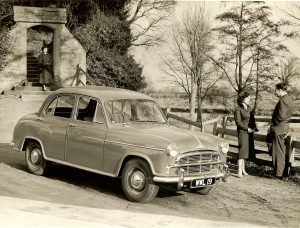
An Isis SI Saloon
ISIS
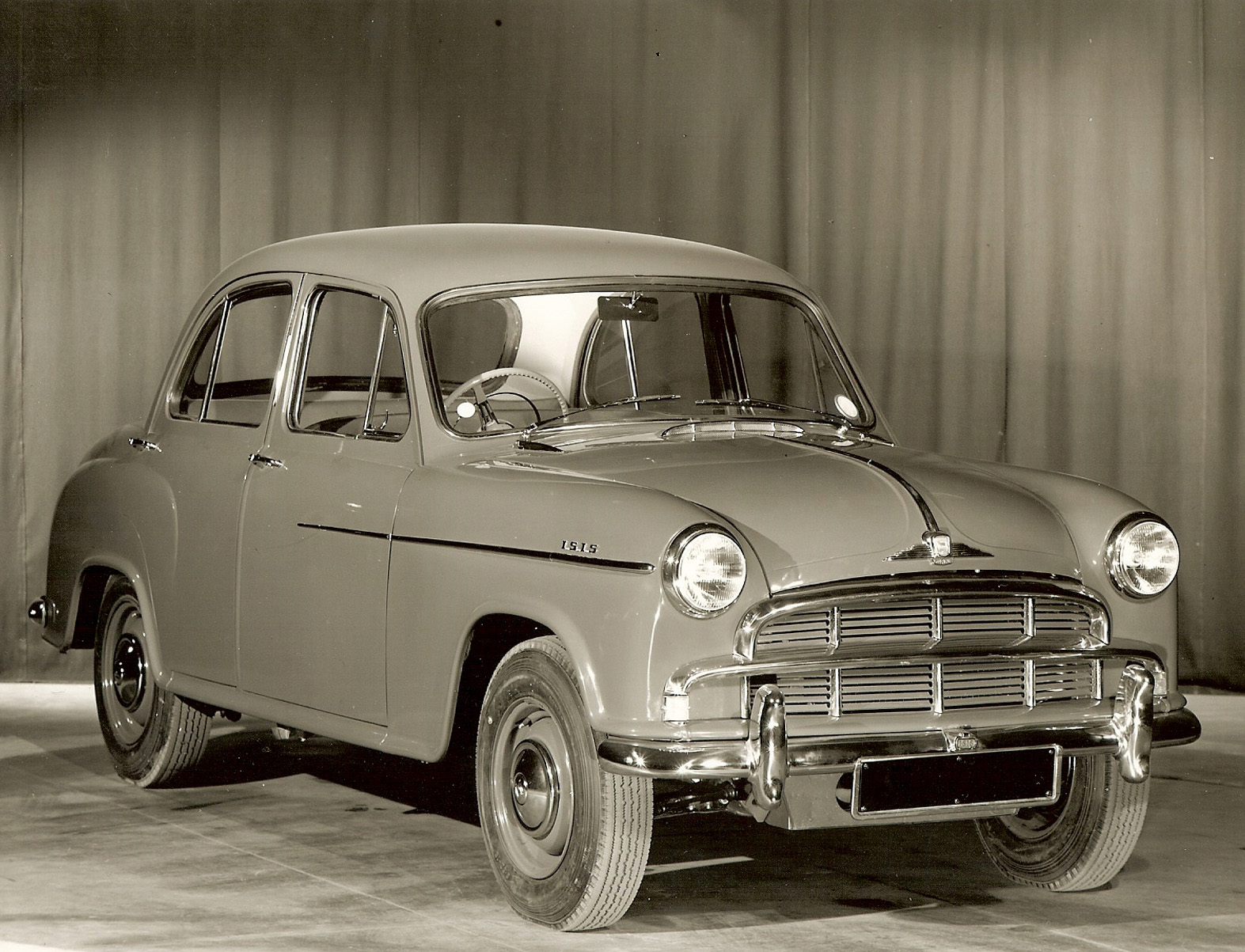
In July 1955 the pre-war Isis name returned in the top of the range Series I. It was the first Morris with the C-series 2,639cc ohv engine. It was based on the Oxford, but the front body was lengthened and strengthened to accommodate the longer and heavier 6-cylinder engine. There was also a Traveller with an ash clad rear steel body identical to the Oxford but with two additional rear facing seats. In October 1956, like the Oxford, the styling was updated for the Series II with options for overdrive, automatic, duotone colours and a deluxe version. There was a Traveller based on the Series II but with the rear identical to the Series I. Isis cars were the fastest and most powerful Morris of their day. When production ceased in 1958, the famous Isis name was never used again.
Total production of the Series I and II Isis was 13,106.
MCV
The Series III half-ton van, pick-up and cab were introduced in October 1956, based on the Cowley 1500 but without the fluted bonnet and with a utility interior. They were the last of the range to be phased out in October 1960 with no direct Morris replacement.
Total production of the MCV half-ton was 16,177.
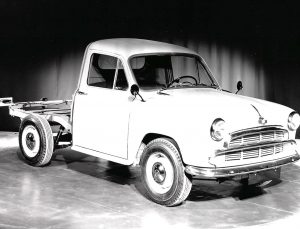
A SIII half ton chassis

Hindustan 14, Landmaster and Ambassador Saloons
HINDUSTAN
Hindustan Motors Ltd. of India were licensed to sell the Oxford Series II saloon as the Hindustan Landmaster. In 1957 Morris gave the rights to build the Oxford Series III saloon and by 1958 it was sold as the Hindustan Ambassador originally with the Oxford MO engine and some underpinnings. The Ambassador had some 6 updates. The B-series petrol and diesel engines were used from 1960 and then the 1,800cc Isuzu engine. Production ended in 2014 after some 5 million cars had been made and it became the iconic Indian vehicle used by taxi drivers to Government officials. After some 60 years the Oxford legacy ended.
These last Morris designed cars were modern and innovative in their day. They were conservative in design and performance and continued the heritage of the famous Morris names. They marked the end of the Nuffield/Morris era and the beginning of the BMC era. They were reliable, sturdy, roomy and comfortable cars that were appreciated by private, business and commercial owners both in the UK and overseas. The Cowley and Isis names were never used again but the Oxford name continued up to the Series VI in 1971. The B-series engine was continuously developed up to 1,800cc and survived into the early 1980s.