
Morris Oxford
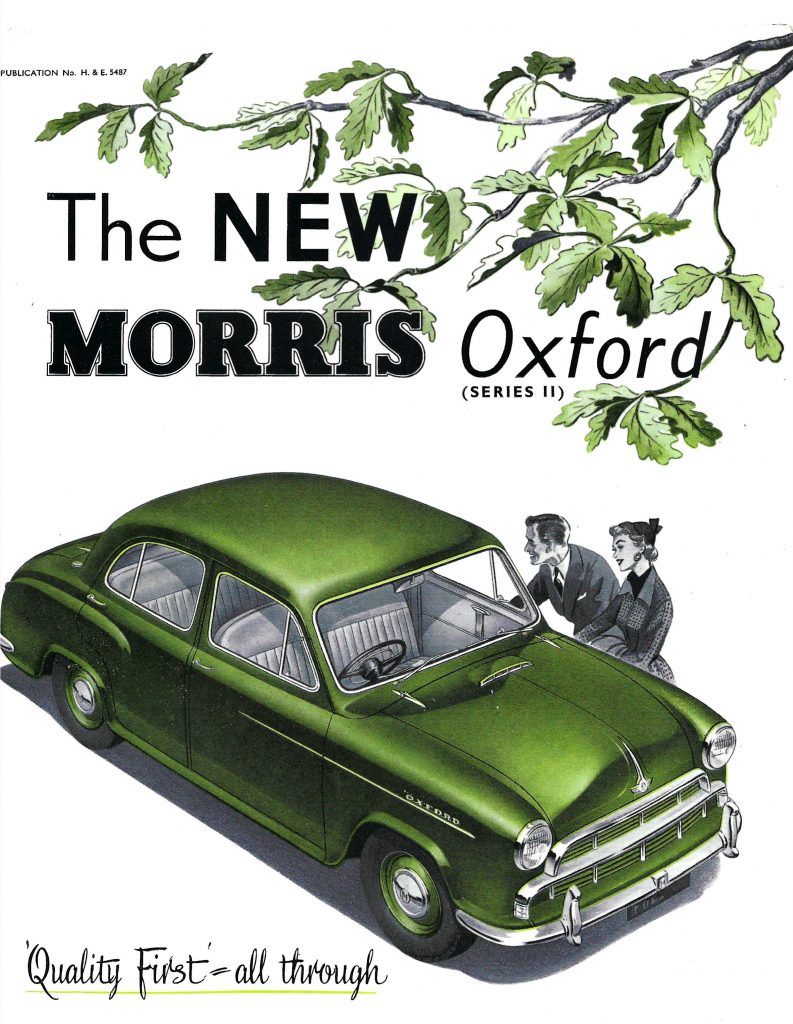
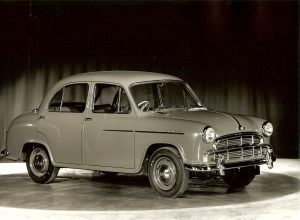
An Oxford Sll Saloon
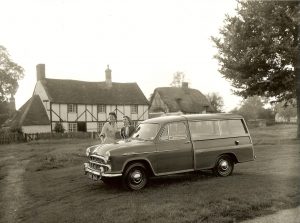
An Oxford SII Traveller
Series II: 1954-1956
The Series II replaced the Series MO in May 1954 and cost £744. It heralded a new range as it was followed by the Cowley 1200 and the Isis Series I, both of which were based on the Oxford albeit with different engines and levels of trim. It had the new BMC B-series 1,489cc ohv engine. It had a 4-speed column gearchange, torsion bar front suspension and semi-elliptic rear leaf springs with telescopic dampers front and rear. With the rack and pinion steering there was a good quality ride and reliability. There were bolt on front wings and a one-piece windscreen. The doors opened wide and there was a 16ft3 boot.
There was a spacious well-appointed interior. The steering wheel was offset to allow 3 adults to sit in the front bench seat of this 6-seater saloon. There were 4 colour options and interior colour was either Maroon or Green. It met the needs of a family or for business both in the UK and overseas and was well received by the motoring press. It was widely exported either complete or in kit form (CKD) for final assembly in country.
The only other Oxford variant was the Traveller. This had a timbered rear body on a steel and aluminium frame and only 2 front doors. Mechanically it was based on the saloon but only had 3 colour options and cost £822 when introduced in October 1954.
The Series II saloon and Traveller had a production run of 87,340, until they were replaced by the Series III. The Series II saloon was also assembled in India under licence by Hindustan Motors where it was known as the Hindustan Landmaster.
Series III: 1956-1959
The Series III of October 1956 was an updated Series II and cost £844. The refreshed range included the Cowley 1500 and Isis Series II. An uprated engine boosted power output from 50 to 55 bhp. It had a 4-speed column or floor gear change. Briefly available as a £50 optional extra was a two pedal automatic clutch Manumatic system.
There were styling updates externally and internally. It was available in 7 single colours or 6 duotone colour options. 52,236 were made until replaced by the Series V in March 1959. In 1959 the saloon production rights were given to Hindustan Motors of India who continued to produce nearly 5 million saloons, known as the Hindustan Ambassador, in various forms until 2014.
The only other variant was the Traveller with the same timbered rear which was unchanged from the Series II. It cost £936 and was never available with the Manumatic option. It was an 8 month stop gap with a limited production run until it was replaced by the Series IV Traveller. It was the last Oxford model to have the ash framing.

An Oxford Slll Saloon

An Oxford SIII Traveller
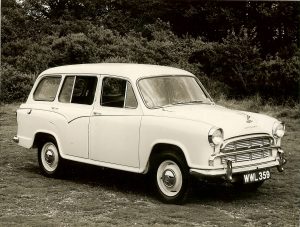
An Oxford SIV Traveller (monotone)
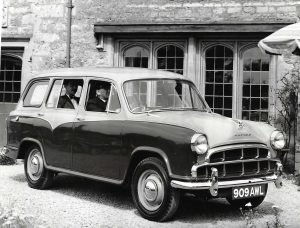
An Oxford SIV Traveller (duotone)
Series IV: 1957-1960
The Series IV was introduced in August 1957 and cost £1,002. It was only available as a Traveller and was the first Morris all steel Traveller with a vertically opening single tail gate and spare wheel and tool compartment below the rear floor, with 4-door saloon car quality interior. It was mechanically based on the Series III. The rear compartment gave 26 ft3 with the rear seat up or 50 ft3 with it lowered, with a clear length of 52ins (1.95m). It was available in 7 single colours or 8 duotone options. Interior trim colours were Red, Green or Grey.
This Traveller was a robust, reliable and practical vehicle with several innovative features and could meet the needs of a family or for business both in the UK and overseas and it was well received by the motoring press. The Series IV Traveller continued in production after the Series III saloon was phased out and remained until replaced by the Series V Traveller in April 1960, by which time 41,517 Series IV Travellers were made. It marked the end of 6 years of the Oxford Series II to IV range of saloons and Travellers.